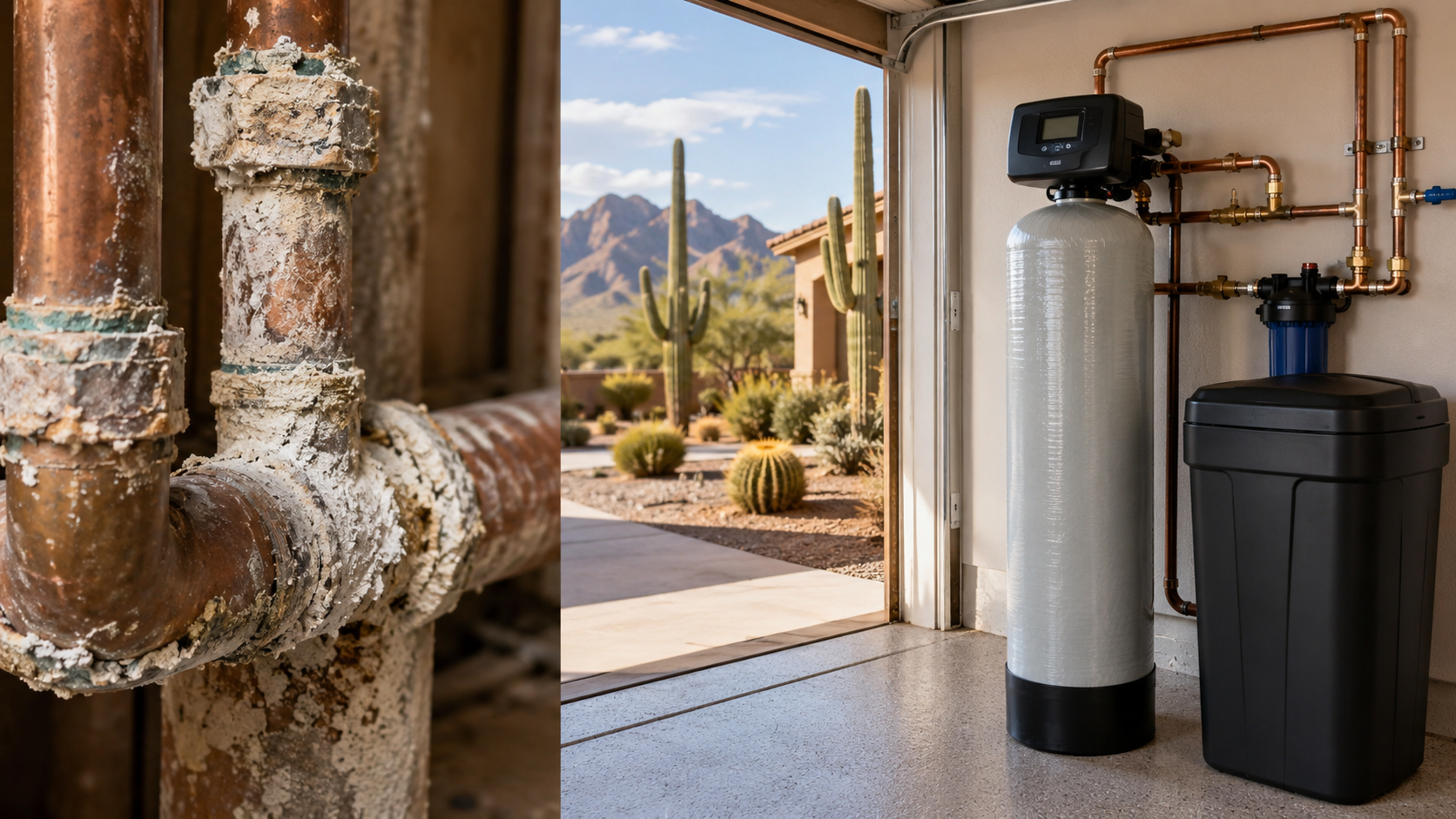
Best Water Softener Systems: Why Arizona Needs Salt-Based Technology
Arizona is one of the hardest-water states in the country. The Colorado River, the primary water source for most of the Phoenix Metro carries dissolved minerals picked up across thousands of miles of desert geology. By the time that water reaches your tap in Queen Creek, Chandler, or Scottsdale, it carries 12 to 20 GPG of calcium and magnesium. That is two to three times the EPA’s 7 GPG hard-water threshold.
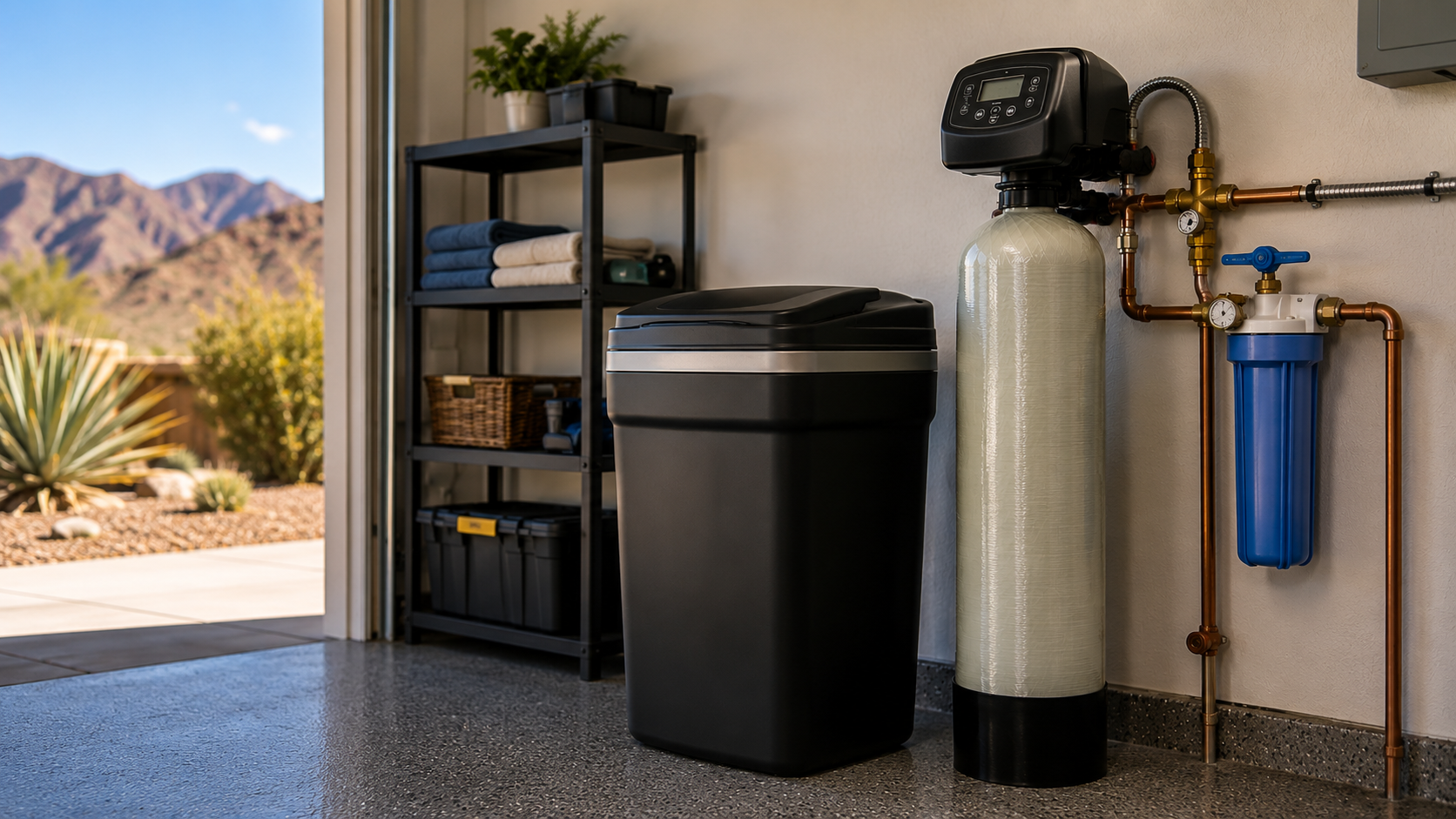
At these levels, salt-free conditioners are inadequate. They modify how mineral particles cluster but don’t remove them. Salt-based ion exchange systems physically pull calcium and magnesium out of the water and replace them with sodium ions. The water leaving the softener tests as genuinely soft less than 1 GPG regardless of what the incoming hardness was.
| Arizona City | Water Hardness | Minimum System Size | Salt-Free Adequate? |
|---|---|---|---|
| Surprise | 2.5 to 5.3 GPG | 24,000 grain | Marginal, borderline |
| Queen Creek | 6 to 17 GPG (avg 12) | 48,000 grain | No, use salt-based |
| Gilbert | 11.5 GPG | 48,000 grain | No, use salt-based |
| Mesa | 13.2 GPG | 48,000 grain | No, use salt-based |
| Phoenix | 10.9 to 16.2 GPG | 48,000 to 64,000 grain | No, use salt-based |
| Scottsdale | 12.5 to 20 GPG | 48,000 to 64,000 grain | No, use salt-based |
| Chandler | 19.3 GPG | 64,000+ grain | No, use salt-based |
Table: Water hardness by Phoenix Metro city with recommended softener system type (2026)
Recommended Water Softener: What Arizona Licensed Plumbers Specify
When Miracle Plumbing installs a water softener in Queen Creek or the broader Phoenix Metro, the specification process starts with a water hardness test not a brand preference. The correct grain capacity for your household is calculated based on daily water usage and your actual hardness reading. That number then determines the right system.
For a three-bedroom Queen Creek home with four occupants at 12 GPG, a 48,000-grain demand-initiated regeneration (DIR) system is the standard specification. DIR valves regenerate only when the resin is actually exhausted, important in Arizona where salt usage should be kept efficient given the high regeneration frequency that high hardness demands.
For Chandler or North Scottsdale homes at 18 to 20 GPG, the specification typically steps up to a 64,000-grain or 80,000-grain system. A correctly sized large system regenerates less frequently than an undersized unit working at capacity, which extends resin life and reduces salt consumption over time.
Are Water Softeners Safe for Septic Systems: Arizona Homeowners’ Guide
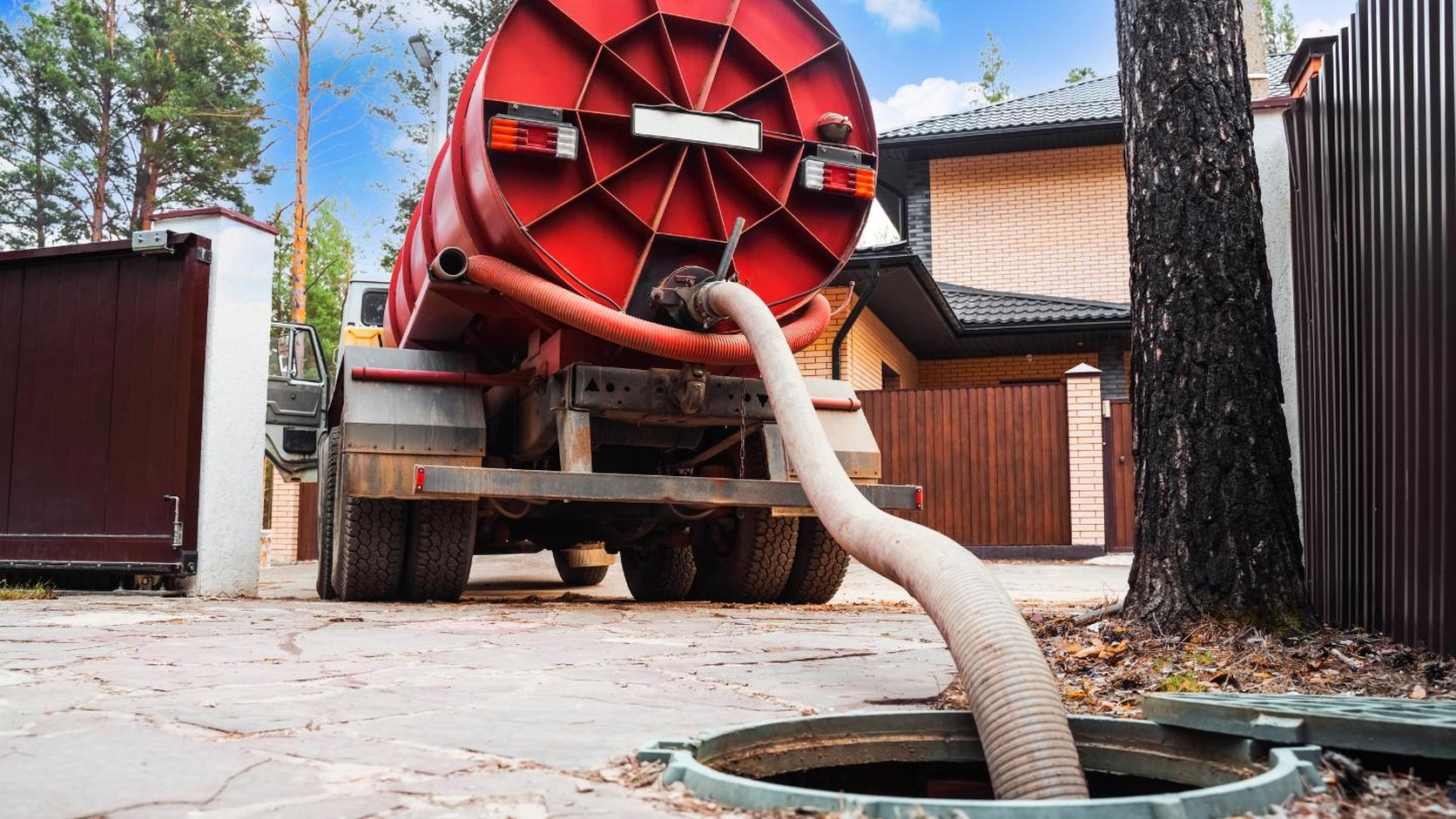
A common question in areas like San Tan Valley and parts of Queen Creek where septic systems are still in use. The Water Quality Association and independent studies consistently find that a properly sized salt-based water softener does not harm a functioning septic system. The concern that sodium from the regeneration brine disrupts septic bacteria has not been supported by well-designed studies at residential brine volumes.
The key qualifier is ‘properly sized.’ An oversized softener that regenerates daily sends more brine to the drain field than a correctly sized unit that regenerates every 3 to 4 days. The solution is correct sizing, which a licensed plumber calculates based on actual household hardness and usage. Demand-initiated regeneration (DIR) systems are the preferred choice for septic homes; they regenerate only when needed, minimizing brine discharge.
Best Water Softener Scottsdale: High-End Homes, High Hardness
Scottsdale presents a unique challenge: water hardness of 12.5 — 20 GPG depending on zone, combined with a high proportion of premium homes with travertine tile, natural stone countertops, and premium fixtures. Hard water at 15 to 20 GPG visibly damages these surfaces within 18 to 24 months etching stone, pitting chrome, and leaving white deposits on glass shower enclosures.
Miracle Plumbing has served Scottsdale since 2008. The team works carefully in premium home environments and recommends systems appropriately sized for Scottsdale’s hardness profile. For most Scottsdale homes, a 64,000-grain unit is the starting point, with North Scottsdale homes near the 20 GPG end of the range sometimes requiring 80,000 grains or a dual-tank configuration.
Benefits of Water Softener Phoenix: Why Phoenix Homeowners Act First
Phoenix water averages 18 GPG among the highest of any major U.S. metropolitan area. At 18 GPG, calcium deposits accumulate inside water heaters at approximately twice the rate of a home on 9 GPG water. The same scale that reduces a water heater’s efficiency by 20% in soft-water states does so in half the time in Phoenix.
Phoenix homeowners with copper pipe systems face an additional concern: hard water accelerates the corrosion process at pipe joints and elbows, contributing to pinhole leaks and, over time, the slab leaks that require electronic leak detection and repair. A water softener slows this corrosion significantly, extending the functional life of original plumbing.
Frequently Asked Questions
What is the best water softener brand for Arizona in 2026?
Brand is less important than grain capacity, control valve type, and correct sizing for your water hardness. Fleck, Pentair, SpringWell, and SoftPro all produce reliable systems that perform well at Arizona hardness levels. A licensed plumber sizes the system to your household’s specific conditions the system that fits correctly performs better than any premium brand installed at the wrong size.
Does Arizona law require a licensed plumber to install a water softener?
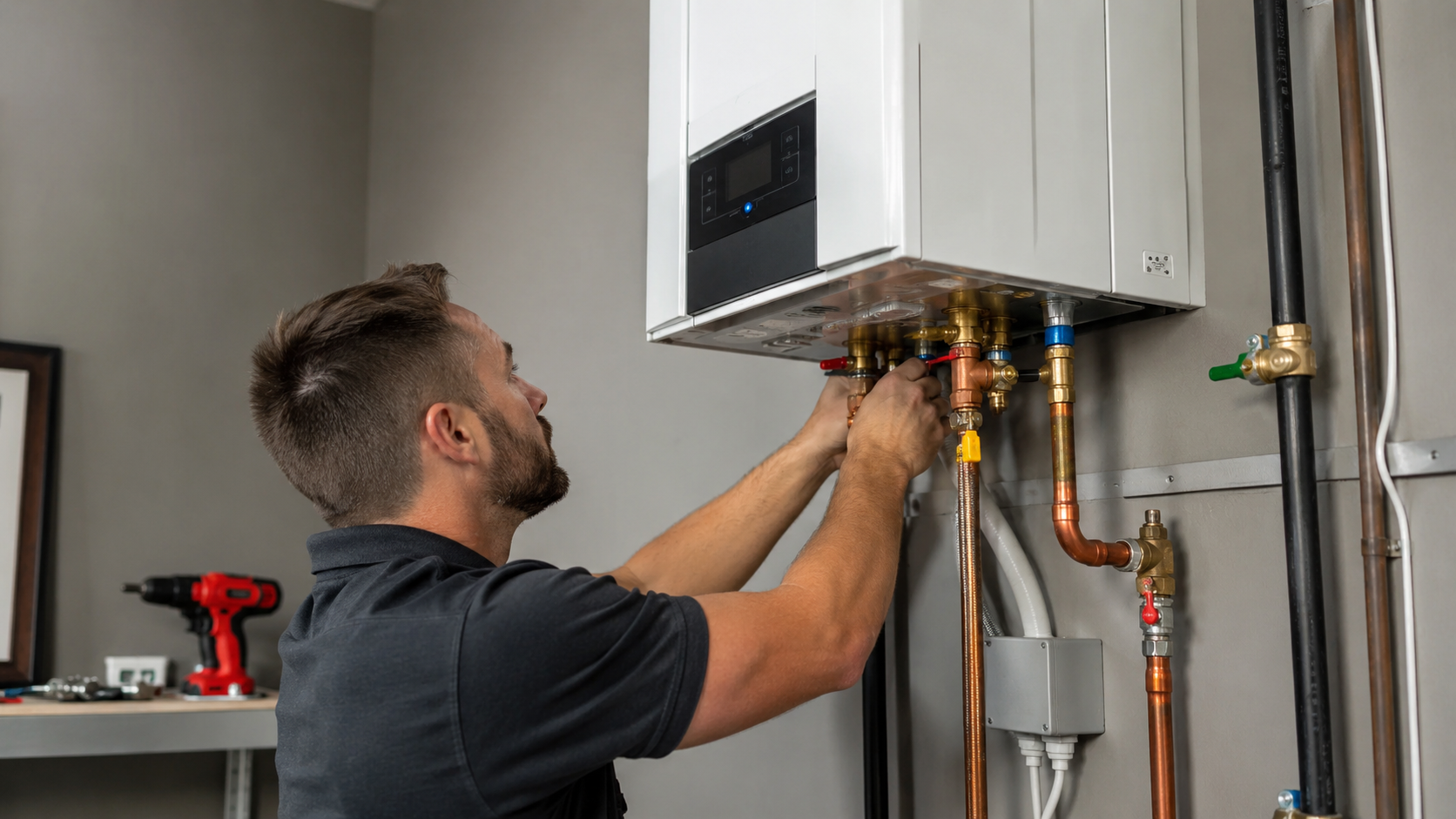
Arizona state plumbing code requires a licensed contractor for connections to the main water supply line. A water softener installation involves exactly that connection. In most Phoenix Metro municipalities, this work also requires a licensed plumber to pull any applicable permits. Using an unlicensed installer can void your equipment warranty and may create issues with your homeowners insurance if a leak causes property damage.
How does Arizona hard water affect water heaters specifically?
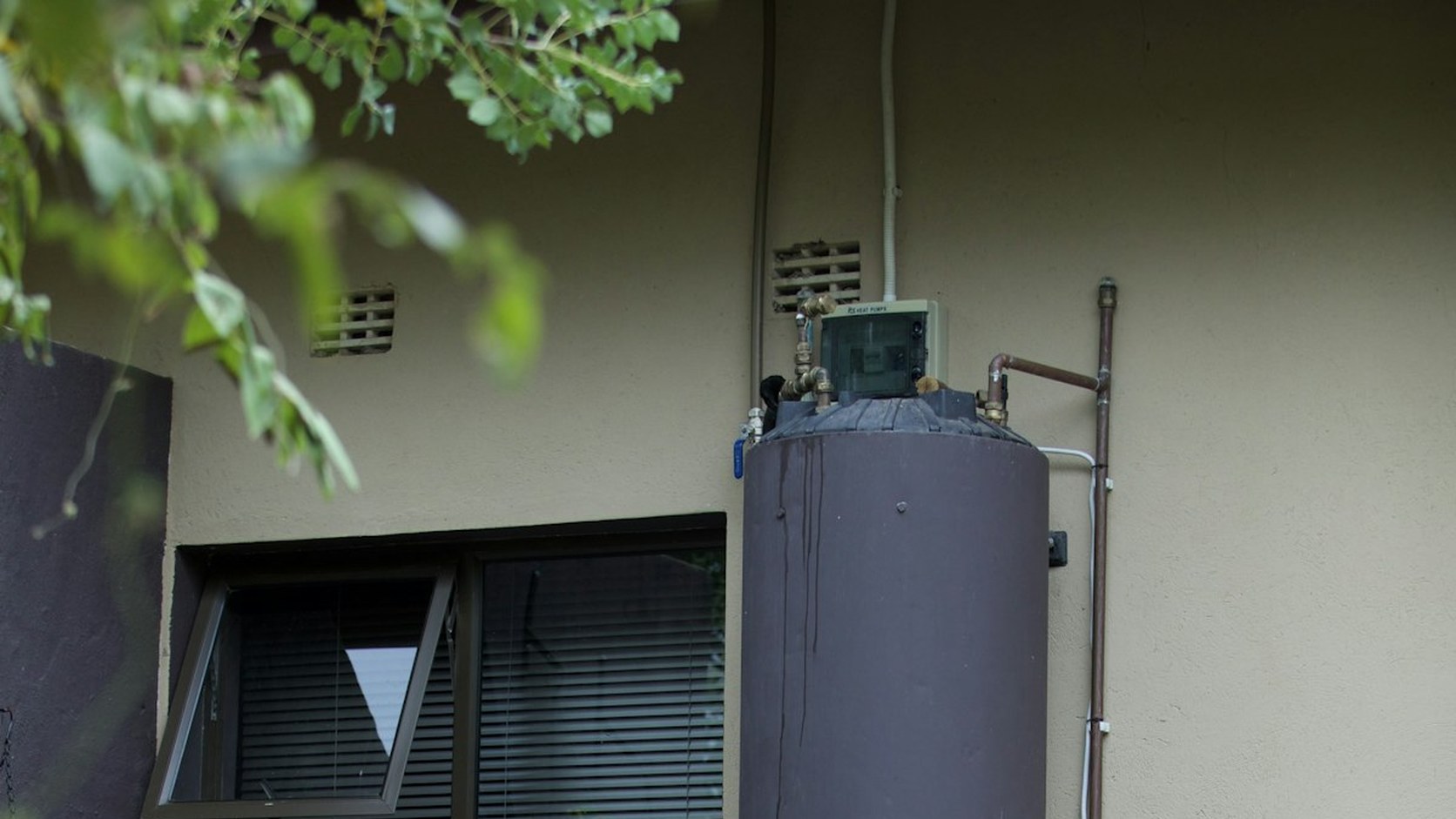
Scale deposits accumulate on the bottom of tank-style water heater elements and on the heat exchanger of tankless units. In Queen Creek’s 12 GPG water, a 50-gallon gas water heater can accumulate a 1/4-inch scale layer within 3 to 5 years. That layer forces the burner to run longer and hotter to heat the same water, increasing energy use by 15 to 20% and shortening the unit’s life by 2 to 3 years.
Can a water softener remove the chlorine taste from Phoenix Metro tap water?
No. A water softener removes hardness minerals (calcium and magnesium) through ion exchange but does not remove chlorine, chloramines, or other dissolved chemicals. For chlorine removal, you need a carbon filter or a reverse osmosis system. Many Phoenix Metro homeowners combine a whole-house water softener with an under-sink reverse osmosis system for comprehensive treatment.
Are there water softener rebates available in Arizona?
Some Arizona utility companies and municipalities have offered water softener rebates in the past as part of water conservation programs, since softeners reduce scale buildup that wastes energy. Check with your local utility provider Salt River Project (SRP), Arizona Public Service (APS), or your municipal water provider for current programs. Rebate availability changes annually.
Call Miracle Plumbing & AC: Same-Day Service Available
If you need water softener installation in Queen Creek, Scottsdale, Phoenix, and Chandler, Miracle Plumbing & AC has been the trusted local choice since 2008. Kirk Todd’s team is licensed, bonded, insured, and available 24/7. Call (480) 544-0057 or visit miracleplumbingaz.com for a free quote. Same-day service available for most calls scheduled before noon.