Published July 9, 2026 · Water Softeners & Filtration
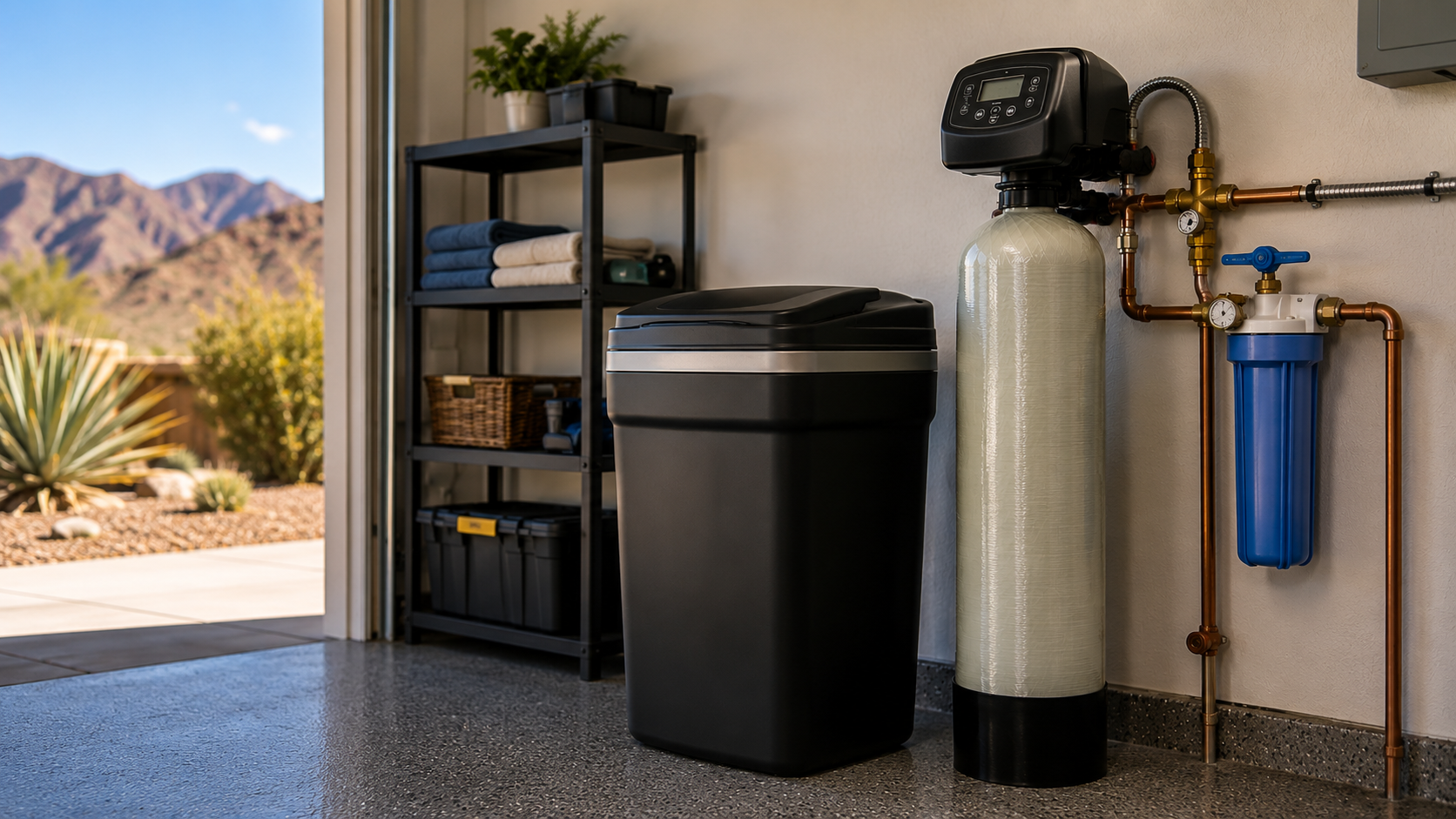
The most common question we hear from softener owners is water softener how much salt to add, and how often. In most Arizona homes with 15 to 20 grains per gallon of hardness, that means checking the brine tank monthly and using roughly one 40-pound bag per month for an average household. This guide covers the full maintenance routine so your softener keeps performing for years.
Miracle Plumbing & AC installs and services water softeners across Queen Creek, Gilbert, Chandler, Mesa, and San Tan Valley, and salt management is the single most common maintenance question homeowners ask us., AZ for our full range of services.
How Much Salt Does a Water Softener Need?
Salt usage depends on your household size, water usage, and the hardness level of your specific water supply, but as a general Arizona benchmark, a typical family uses about one 40-pound bag per month. Larger households or homes with very high hardness may use closer to one and a half bags monthly.
How Often to Add Salt
Check your brine tank at least once a month and keep the salt level at least one-quarter full, ideally closer to half. Letting the tank run completely empty causes the system to stop regenerating properly, which allows hard water to bypass the softener entirely until salt is replenished and a regeneration cycle completes.
How to Add Salt to a Water Softener
The process is simple and takes just a few minutes.
- Open the brine tank lid, usually located next to or on top of the softener resin tank.
- Check the current salt level and look for a hard “salt bridge” (a crust that can form above the water line).
- Break up any salt bridge gently with a broom handle or similar tool if present, since a bridge prevents salt from dissolving into the brine solution.
- Add pellet or crystal salt made specifically for water softeners, filling to no more than two-thirds full.
- Close the lid and record the date so you can track your usage pattern over time.
Best Water Softener Salt to Use
Not all salt products are equal. Softener-grade pellet or crystal salt (evaporated or solar salt) dissolves cleanly and produces less residue than cheaper rock salt, which can leave sediment in the brine tank. In Arizona’s already mineral-heavy water conditions, using a cleaner salt product reduces maintenance and helps the resin bed last longer.
Softener acting up or running low often?
We can inspect your system, check the brine tank, and confirm it is regenerating correctly.
How Water Softener Regeneration Works
Regeneration is the process where the softener flushes the resin bed with the salt brine solution, replacing accumulated calcium and magnesium with sodium ions, then rinses the resin clean before returning to service. Most modern softeners regenerate automatically on a schedule based on water usage or a timer, typically overnight when water demand is low.
My Water Softener Is Not Regenerating: What to Check
If you notice hard water symptoms returning (spots, scale, stiff laundry) even though the tank has salt, a few things could be wrong:
- A salt bridge is blocking the salt from dissolving into the brine tank
- The control valve or timer has malfunctioned and is not triggering regeneration
- The unit is undersized for your household, causing it to run out of capacity between cycles
- The resin bed has reached the end of its service life and needs replacement
Full System Check When DIY Isn’t Enough
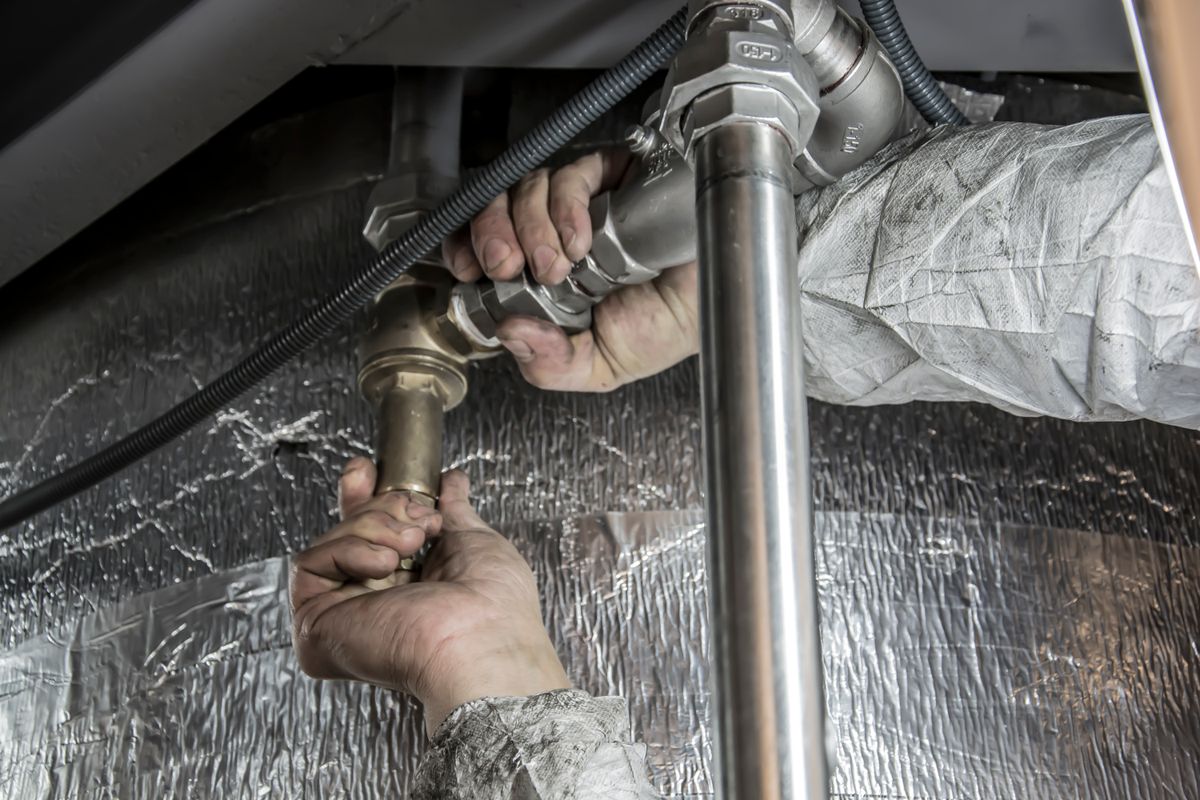
If salt levels and a check for a salt bridge do not resolve the issue, the control valve, resin bed, or overall sizing may need a professional look. See our water softener cost guide if it turns out replacement makes more sense than continued repair on an aging unit.
Frequently Asked Questions
How much salt does a water softener need?
A typical Arizona household uses roughly one 40-pound bag per month, though larger households or very hard water may require more. Check the brine tank monthly to stay ahead of it.
How often should I add salt to my water softener?
Check the brine tank at least once a month and top it off whenever the level drops below about one-quarter full.
When should I add salt to my water softener?
Add salt whenever the tank drops below roughly one-quarter to one-third full. Waiting until it is completely empty risks a regeneration cycle running without enough brine.
Why is my water softener not regenerating?
The most common causes are a salt bridge blocking dissolution, a malfunctioning control valve or timer, an undersized unit for your household, or a resin bed that has reached the end of its service life.
What is the best water softener salt to use?
Softener-grade pellet or crystal salt (evaporated or solar salt) dissolves more cleanly than cheaper rock salt and produces less tank residue, which reduces maintenance over time.
Need help with softener maintenance or a repair?
Call Miracle Plumbing & AC for service in Queen Creek, Gilbert, Chandler, Mesa, or San Tan Valley.
Sources: Manufacturer maintenance guidance for residential water softening systems. Reflects typical 2026 usage patterns in the Phoenix Metro area.
Pricing note: Salt usage and regeneration schedules vary by household size, water hardness, and specific equipment. Consult your unit’s manual for manufacturer-specific guidance.